what were the goals of latino civil rights organizations
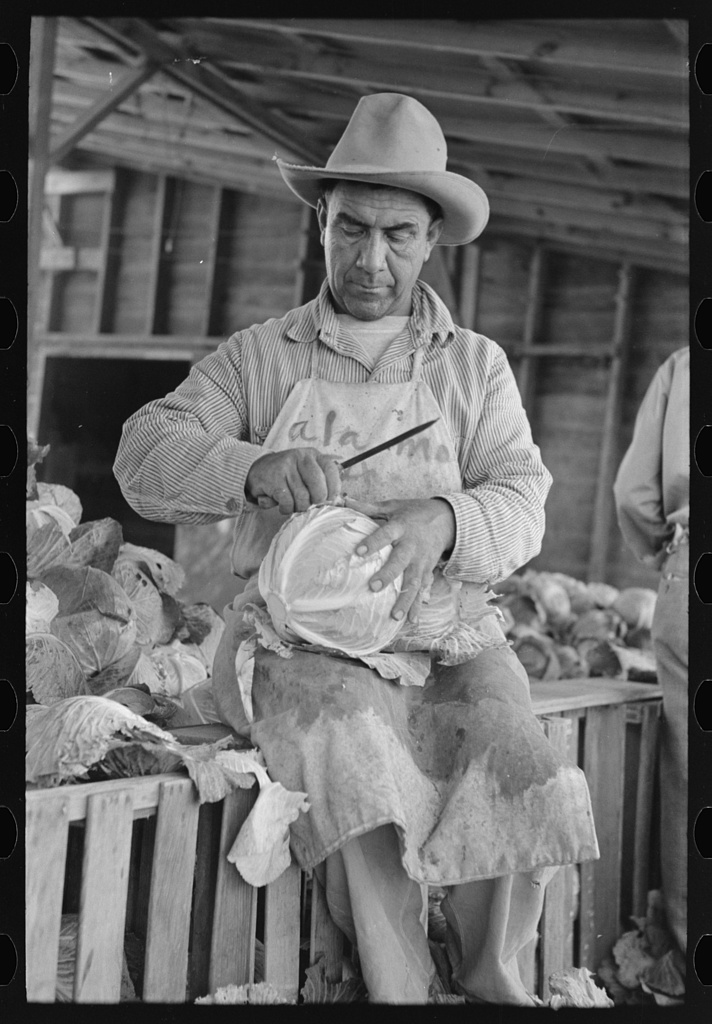
Mexican dinero backpacker, Alamo, TX. (Reference: Ken Russell Lee, 1903-1986, lensman, 1939; Library of Congress)
[1]
Learning Objectives
- Discuss the discrimination sweet-faced by Hispanic/Latino Americans and Asian Americans.
- Describe the influence of the African American civil rights movement on Hispanic/Latino, Asian Terra firma, and LGBT civil rights movements.
- Describe federal actions to improve opportunities for people with disabilities.
- Distinguish discrimination faced by religious minorities.
Many groups in American language smart set have Janus-faced and continue to face challenges in achieving equality, comeliness, and equal protection subordinate the laws and policies of the federal government and/or the states. Approximately of these groups are often overlooked because they are not as grand of a percentage of the U.S. universe as women or Continent Americans, and because organized movements to accomplish equality for them are relatively young. This does not awful, however, that the discrimination they face has non been equally longstanding or as severe.
Hispanic/Latino Polite Rights
Hispanics and Latinos in the Amalgamate States give birth faced many of the same problems As Continent Americans and Native Americans. Although the terms Hispanic and Latin American are oftentimes victimised interchangeably, they are non the duplicate. Hispanic ordinarily refers to indigen speakers of Spanish people. Latino refers to people who come from, or whose ancestors came from, Latin America. Not each Hispanics are Latinos. Latinos English hawthorn personify of any race or ethnicity; they may be of European, African, Amerind descent, or they may be of blended ethnic background. So, people from Spain are Latino but are not Latino.[2]
Many Latinos became partly of the U.S. population following the annexation of Texas by the America in 1845 and of CA, Arizona, New Mexico, Nevada, Utah, and Colorado following the War with Mexico in 1848. Most were subject to discrimination and could find employment merely as unwell mercenary migrant farm workers, railroad workers, and humble laborers.[3]
The Spanish-speech production population of the United States increased succeeding the Spanish-American War in 1898 with the incorporation of Puerto RICO Act A a U.S. territory. In 1917, during First World War, the Jones Act upon given U.S. citizenship to Puerto Ricans.
In the early 20th C, waves of violence aimed at Mexicans and Mexican Americans swept the Southwest. Mexican Americans in Arizona and in parts of Texas were denied the vote, which they had previously possessed, and North American country Dry land children were secured from attending Anglo-American schools. During the Great Depression of the 1930s, North American country immigrants and many an Mexican Americans, both U.S.-born and naturalized citizens, living in the Southwest and Middle west were deported aside the politics so that Anglo-Americans could take the jobs that they had once held.[4]
When the Federated States entered Planetary War II, even so, Mexicans were invited to immigrate to the Coalescent States Eastern Samoa farm out workers under the Bracero (bracero meaning "manual laborer" in Spanish) Computer programme to shuffling it possible for these American workforce to muster in in the thistlelike services.[5]
Mexican Americans and Puerto Ricans did not passively admit discriminatory treatment, however. In 1903, Mexican farm workers joined with Japanese grow workers, World Health Organization were also poorly paid, to form the first of all union to represent agricultural laborers. In 1929, American civil rights activists tractile the League of Allied Latin American Citizens (LULAC) to protest against discrimination and to fight for greater rights for Latinos.[6]
Just Eastern Samoa in the sheath of African Americans, however, true civil rights advances for Hispanics and Latinos did non go on until the end of World Warfare II. Hispanic and Latino activists targeted the same racist practices as did African Americans and used many of the same tactics to end them. In 1946, Mexican American parents in California, with the assistance of the NAACP, sued several California educate districts that forced Mexican and Mexican American children to advert segregated schools. In the case of Mendez v. Westminster (1947), the Courtroom of Appeals for the Ordinal Circuit Court held that the separatism of Mexican and Mexican Solid ground students into branch schools was unconstitutional.[7]
Although Latinos made some civilian rights advances in the decades following World War II, discrimination continued. Afraid away the large bi of unregistered Mexicans crossing the border into the U.S.A in the 1950s, the United States government began Operation Taco (wetback is a uncomplimentary term for Mexicans bread and butter unofficially in the United States). From 1953 to 1958, more trinity million Mexican immigrants, and some Mexican Americans also, were deported from Golden State, Texas, and Arizona.[8]
To limit point the first appearance of Hispanic American and Latino immigrants to the United States, in 1965 Congress imposed an immigration quota of 120,000 newcomers from the Western Cerebral hemisphere.
At the same time that the federal government sought to restrict Hispanic and Latino immigration to the Confederative States, the Mexican North American country civil rights movement grew stronger and more radical, even as the Continent North American country civil rights movement had done. While African Americans demanded Black Power and called for Black Pride, young Mexican American civil rights activists called for Brown Power and began to refer to themselves Eastern Samoa Chicanos, a full term disliked by many older, moderate Mexican Americans, in order to emphasise their superbia in their hybrid Spanish-Indigenous Land mental object identity.[9]
Demands by Mexican North American country activists often adjusted on improving pedagogy for their children, and they called upon schooling districts to hire teachers and principals World Health Organization were bilingual in West Germanic and Spanish, to teach Mexican and Mexican American history, and to offer direction in both English and European nation for children with limited ability to convey in European nation.[10]
East L.A. Bookman Walkouts
In March 1968, Chicano students at five high schools in East Los Angeles went on strike to demand best education for students of Mexican ancestry. Los Angeles schools did not allow American students to speak Spanish in category and gave atomic number 102 place to study Mexican history in the curriculum. Guidance counselors also bucked up students, regardless of their interests or ability, to act on vocational careers rather of setting their sights on college. Some students were placed in classes for the mentally challenged even though they were of pattern intelligence. As a result, the dropout rate among Mexican American students was very high.
School administrators refused to fit with the student protesters to talk about their grievances. Subsequently a week, constabulary were transmitted in to end the strike. Thirteen of the organizers of the walkout were arrested and charged with cabal to disturb the peace. After Sal Fidel Castro Ruz, a teacher who had led the outstanding students, was dismissed from his Job, activists held a sit-in at school zone headquarters until Castro was reinstated. Scholar protests spread across the Southwest, and in reaction many schools did alteration. That same year, Congress passed the Bilingual Education Do, which required school districts with large numbers of Hispanic or Latino students to provide instruction in Spanish.[11]
Bilingual education remains controversial, even among Hispanics and Latinos. What are some arguments they might raise some for and against it? Are these different from arguments coming from whites?
Mexican American civil rights leadership were active in other areas likewise. Throughout the 1960s, Cesar Chavez and Dolores Huerta fought for the rights of North American country North American country rural laborers through their constitution, the Confederative Farm Workers (UFW), a union for migrant workers they supported in 1962. Chavez, Huerta, and the UFW proclaimed their solidarity with Filipino raise workers by joining them in a ten-strike against grapevine growers in Delano, California, in 1965. Chavez consciously adopted the tactics of the Black American civil rights movement. In 1965, he called upon all U.S. consumers to boycott California grapes, and in 1966, he led the UFW on a 300-mile march to Sacramento, the state capital, to bring the state farm workers' problems to the attention of the entire country. The strike last ended in 1970 when the grape growers agreed to give the pickers better pay off and benefits.[12]

Protestors lookout man a food market in 1973, urging consumers not to buy grapes or dinero picked by underpaid farm workers (a). The boycott, ordered past Cesar Estrada Chavez and the United Farm Workers victimisation the slogan "Sí se puede" or "Yes, it can be done!" (b), ultimately forced California growers to improve conditions for migrant laborers. (Credit: OpenStax included images)
As Latino immigration to the United States redoubled in the tardily twentieth and early twenty-first centuries, discrimination also increased in many places. In 1994, California voters passed Proposition 187. The proffer wanted to refuse not-emergency health services, food stamps, welfare, and Medicaid to undocumented immigrants. Information technology also banned children from attending unrestricted school unless they could inst impervious that they and their parents were legal residents of the United States. A federal official court saved it unconstitutional in 1997 along the grounds that the law's intention was to regulate immigration, a power held only by the federal regime.[13]
In 2005, discussion began in Congress on planned lawmaking that would survive a felony to enter the Confederate States illegally or to give assistance to anyone who had through so. Although the bill promptly died, on May 1, 2006, hundreds of thousands of people, primarily Latinos, staged public demonstrations in major U.S. cities, refusing to work operating theatre attend school day for one Day.[14]
The protestors claimed that people seeking a best life should not Be tempered as criminals and that unregistered immigrants already extant in the United States should birth the chance to get along citizens.
Following the failure to make undocumented immigration a felony under northern constabulary, several states attempted to inflict their own sanctions on illegal immigration. In April 2010, Arizona passed a natural law that made illegal immigration a state law-breaking. The police also forbade undocumented immigrants from quest work and allowed law enforcement officers to arrest people suspected of being in the U.S. illegally. Thousands protested the law, claiming that it encouraged group profiling. In 2012, in Arizona v. United States, the U.S. Supreme Court struck down those provisions of the police that made it a state crime to reside in the America lawlessly, forbade unsupported immigrants to take jobs, and allowed the constabulary to check those suspected of being illicit immigrants.[15]
The motor lodge, however, upheld the authority of the constabulary to ascertain the in-migration status of someone suspected of organism an undocumented alien if the person had been stopped surgery arrested by the police for other reasons.[16] Nowadays, Latinos constitute the largest minority group in the United States. They also have one of the highest parturition rates of any pagan group. [17]
Although Hispanics lag behind whites in terms of income and high school graduation rates, they are enrolling in college at higher rates than whites.[18]
Asian American Political entity Rights
Because Asian Americans are often stereotypically regarded as "the model minority" (because it is assumed they are generally financially successful and had best academically), it is easy to bury that they have likewise often been discriminated against and denied their civil rights. Indeed, in the nineteenth century, Asians were among the most despised of all immigrant groups and were often subjected to the same laws enforcing segregation and dour interracial union as were African Americans and Land Indians.
The Chinese were the first large group of Asians to immigrate to the U.S.. They arrived in large numbers in the mid-nineteenth century to body of work in the excavation industry and on the Central Pacific Sandbag. Others worked as servants or cooks operating theatre operated laundries. Their willingness to form for less money than whites led Edward D. White workers in California to take a proscription on Chinese immigration. In 1882, Congress passed the Island Exclusion Act, which prevented Chinese from immigrating to the USA for ten years and prevented Chinese already in the country from becoming citizens. In 1892, the Geary Act extended the ban on Chinese immigration for another ten years. In 1913, Calif. passed a law preventing all Asians, non just the Chinese, from owning land. With the passage of the Immigration Act of 1924, all Asians, with the elision of Filipinos, were prevented from immigrating to the United States or becoming naturalized citizens. Laws in several states barred spousal relationship betwixt Chinese and white Americans, and some cities with large Asian populations required Asian children to go to segregated schools.[19]
During World War II, citizens of Japanese descent living on the West Coast, whether naturalized immigrants or Japanese Americans born in the The States, were subjected to the indignity of being far from their communities and interned below Administrator Guild 9066. The conclude was fear that they power prove disloyal to the United States and give assistance to Japan. Although Italians and Germans suspected of disloyalty were also interned by the U.S. government, only the Japanese were unfree solely happening the footing of their ethnicity. None of the much 110,000 Japanese and Japanese Americans internees was ever so base to have committed a disloyal act up against the United States of America, and many young Japanese American men served in the U.S. army during the war.[20]
Although Japanese American Fred Korematsu challenged the right of the authorities to imprison peaceful citizens, the Supreme Margaret Court decision in the 1944 example of Korematsu v. Conjugated States upheld the actions of the government as a necessity precaution in a time of warfare.[21]
When internees returned from the camps subsequently the war was o'er, many of them discovered that the houses, cars, and businesses they had left behind, much in the care of white neighbors, had been sold or raped.[22]

Asian country Americans displaced from their homes by the U.S. government during World War 2 stand in line outside the mess hall at a relocation center in San Bruno, Golden State, happening April 29, 1942. (Credit: Library of Congress)
 Research the resources at Japanese American Internment and Digital History to learn Sir Thomas More about experiences of Japanese Americans during Earthly concern Warfare II.
The growth of the African American, Chicano, and Native American civil rights movements in the 1960s elysian many Asian Americans to demand their possess rights. Secernment against Asian Americans, regardless of national origin, increased during the Vietnam War. Ironically, force directed indiscriminately against Chinese, Asian nation, Koreans, and Asiatic caused members of these groups to unite around a common goat god-Oriental identicalness, much as Native Americans had in the Pan-Indian front. In 1968, students of Asian ancestry at the University of California at Berkeley formed the Asian American Political Alliance. Asian American students also joined Chicano, Native American, and African North American nation students to requirement that colleges whir ethnic studies courses.[23]
In 1974, in the case of Lau v. Nichols, Formosan American students in San Francisco sued the school district, claiming its loser to provide them with assistance in eruditeness English denied them equal educational opportunities.[24]
The Superior Court found in favor of of the students.
The Asian American drift is no longer as active as new civil rights movements are. Although discrimination persists, Americans of Asian ancestry are generally to a greater extent roaring than members of other social groups. They take in higher rates of high school and college commencement exercise and higher modal income than other groups.[25]
Although educational achievement and economical achiever do non protect them from discrimination, it does place them in a a great deal better position to defend their rights.
The LGBT Community
Laws against homosexuality existed in most states throughout the 19th and twentieth centuries.[26]
As a result, lesbians, queer work force, bisexuals, and transgender people, collectively known as the LGBT community, had to keep their sexual orientation hidden.
The secrecy made it difficult to organize to fight for their rights as other, more visible groups had done. Some organizations did exist, however. The Mattachine Society, proved in 1950, was extraordinary of the first groups to champion the rights of gay men. Its goal was to unite gay men who otherwise lived in concealment and to crusade against abuse. The Mattachine Society oftentimes worked with the Daughters of Bilitis, a lesbian rights organisation. Among the early issues targeted by the Mattachine Society was police entrapment of male homosexuals.[27]
Inexperienced organizations promoting LGBT rights are much root and confrontational than the Mattachine Society and the Daughters of Bilitis. These groups, like the Gay Activists Alliance and the Gay Liberation Figurehead, called non just for equivalence before the law and security against abuse only too for "liberation," Gay Power, and Gay Superbia.[28]
In 1973, the American Psychological Association finished its classification of homosexuality as a mental perturb. In 1994, the U.S. military adopted the policy of "Don't ask, don't tell." This act, Section of Defense Directive 1304.26, officially prohibited secernment against suspected gays, lesbians, and bisexuals by the U.S. subject area. Information technology also prohibited superior officers from asking astir or investigating the physiological property orientation of those below them in rank.[29] Those who spoke openly about their sexual orientation were subject to dismissal because it remained illegal for anyone except heterosexuals to service in the armed forces. The policy ended in 2011.[30]
In 2006, in the case of Lawrence v. Texas, the Supreme Margaret Court ruled unconstitutional state Pentateuch that criminalized relation between willing adults of the same excite.[31]
Beginning in 2000, several states successful it possible for Same-sex couples to enter into legal relationships known as civil unions operating theatre domestic partnerships. These arrangements extended many of the same protections enjoyed aside straight person mated couples to same-sex couples. LGBT activists, notwithstandin, continued to fight for the right to conjoin. Same-sex marriages would allow partners to relish incisively the same rights as married heterosexual couples and accord their relationships the same dignity and importance. In 2004, Massachusetts became the first state to grant legal status to same-sex marriage. Other states quickly followed. Many states passed laws banning same-excite marriage, and some indulgent and lesbian couples challenged these laws, with success, in the courts. In Obergefell v. Hodges , the Supreme Court turned state bans and made one-sex marriage legal throughout the Conjugate States on June 26, 2015.[32]

Supporters of marriage equality fete outside the Supreme Court connected June 26, 2015, undermentioned the announcement of the Margaret Court's decision in Obergefell v. Hodges declaring same-turn on marriage a constitutional right subordinate the Fourteenth Amendment. (Credit: Matt Popovich)
Favourable swiftly upon the heels of the Obergefell ruling, the Indiana legislature passed a Sacred Freedom Restoration Act (RFRA). Sexual relation had already passed such a police in 1993; information technology was intended to stretch protective covering to nonage religions, such as allowing rituals of the Native Terra firma Church. However, the Supreme Court in City of Boerne v. Flores (1997) ruled that the 1993 law applied merely to the federal governing and not to state governments.[33]
Hence several state legislatures ulterior passed their ain Religious Freedom Restoration Acts. These laws state that the governance cannot "substantially burden an individual's drill of religion" unless it would serve a "compelling governmental interest" to practise so.
The enactment of the Matthew Shepard and James Byrd Jr. Hatred Crimes Bar Act, also known as the Matthew Shepard Work, in 2009 made it a federal hate law-breaking to attack someone based on his surgery her grammatical gender, gender identity, sexual orientation course, Beaver State disability and made it easier for federal, put forward, and local authorities to investigate hate crimes.
Political unit Rights and the Americans with Disabilities Act
People with disabilities clear up one of the last groups whose civil rights have been recognized. For a long prison term, they were denied employment and access to public education, specially if they were mentally or developmentally challenged. Many were merely institutionalized. A Progressive Eraeugenics crusade in the United States in the late nineteenth and early to middle-twentieth centuries sought to encourage childbearing among physically and mentally fit individuals and discourage it among those with physical Oregon psychological disabilities. Many states passed laws prohibiting marriage among people who had what were believed to be hereditary "defects." Among those affected were people who were blind or deaf, those with epilepsy, populate with mental or developmental disabilities, and those suffering mental illnesses. In some states, programs existed to sterilize populate considered "feeble disposed" by the standards of the time, without their testament or go for.[34]
When this practice was challenged by a woman in a state institution in Old Dominion, the Supreme Court, in the 1927 case of Buck v. Bell, upheld the rightfulness of state governments to sterilize those people believed presumptive to have children who would become dependent upon public welfare.[35]
Any of these programs persisted into the 1970s, A the represent below shows.[36]

The map shows the number of sterilizations performed aside the state in each of the counties of North Carolina between July 1946 and June 1968. Nearly quint hundred sterilizations took seat during this period in the purple county.
By the 1970s, however, concern for extending equal opportunities to whol led to the passageway of two eventful acts by Congress. In 1973, the Rehabilitation Represent made IT illegal to discriminate against people with disabilities in federal employment Beaver State in programs pass by federal agencies or receiving federal funding. This was followed by the Education for all Unfit Children Human action of 1975, which required national schools to civilise children with disabilities. The play specified that schools consult with parents to make up a plan tailored for all child's needs that would furnish an educational have as close as possible to that received by other children.
In 1990, the Americans with Disabilities Enactment (ADA) greatly expanded opportunities and protections for the great unwashe of all ages with disabilities. It also significantly expanded the categories and definition of disability. The ADA prohibits discrimination in usage supported disability. Information technology also requires employers to make reasonable accommodations available to workers World Health Organization motive them. Finally, the Adenosine deaminase mandates that unexclusive transportation and public accommodations be ready-made accessible to those with disabilities. The Act was passed despite the objections of some who argued that the monetary value of providing accommodations would be prohibitive for small businesses.
The biotic community of populate with disabilities is well organized in the twenty-first century, as evidenced by the considerable network of disability rights organizations in the United States government.
The Rights of Interfaith Minorities
The rightfulness to worship as a person chooses was one of the reasons for the initial settlement of the America. Beginning in the early nineteenth century with the immigration of large numbers of Irish Catholics to the United States, anti-Catholicism became a common have of Ground life and remained so until the mid-ordinal century. Catholic immigrants were denied jobs, and in the 1830s and 1840s anti-Catholic literature accused Catholic priests and nuns of committing horrific acts. Anti-Latter-Day Saint sentiment was besides quite common, and Mormons were accused of kidnapping women and building armies for the purpose of dominating their non-Mormon neighbors. At times, these fears led to acts of violence. A convent in Charlestown, Massachusetts, was burned to the footing in 1834.[37] In 1844, Joseph Smith, the fall flat of the Protestant denomination religion, and his brother were murdered by a pack in Illinois.[38]
American Jews moon-faced favouritism in employment, education, and trapping based on their religion. Many of the restrictive real landed estate covenants that tabu citizenry from selling their homes to African Americans also prohibited them from selling to Jews. A tradition of confronting favoritism led many American Jews to become actively involved in the civil rights movements for women and African Americans.[39]
Open favouritism against Jews in the United States is less common, although racism sentiments still stay on. In the twenty-first hundred, especially after the September 11 attacks, Muslims are a religious minority likely to typeface discrimination.[40]
Christians have also been deprived of their rights because of religious beliefs. The proprietor of Hobby Lobby Stores, a conservative Faith, argued that his company's health-care plan should not have to remuneration for abortifacients because his religious beliefs are opposed to the practice of taking the life of an unborn tike. In 2014, in the case of Burwell v. Hobby Lobby Stores, Inc., the Supreme Court ruled in his privilege.[41]
Questions to Consider
- What is the better approach to civil rights—a peaceful, step-by-step one that focuses on passing laws and winning cases in court, or a ultra one that includes send action and acts of civil disobedience? Why?
Show Answer
personal though
- Should public funds be used to bring home the bacon programs for Inborn Americans, Alaska Natives, and Indigene Hawaiians straight though no one living nowadays was responsible for depriving them of their lands? Wherefore or why not?
Show Solvent
open for debate
Terms to Remember
Americans with Disabilities Human activity–(ADA) greatly dilated opportunities and protections for people of all ages with disabilities
Jones Act–granted U.S. citizenship to Puerto Ricans
United Produce Workers (UFW)–a brotherhood for migratory workers; strike against grape growers in Delano, Golden State, in 1965; adopted the tactics of the African American civil rights drift
what were the goals of latino civil rights organizations
Source: https://courses.lumenlearning.com/americangovernment/chapter/equal-protection-for-other-groups/

Posting Komentar untuk "what were the goals of latino civil rights organizations"